
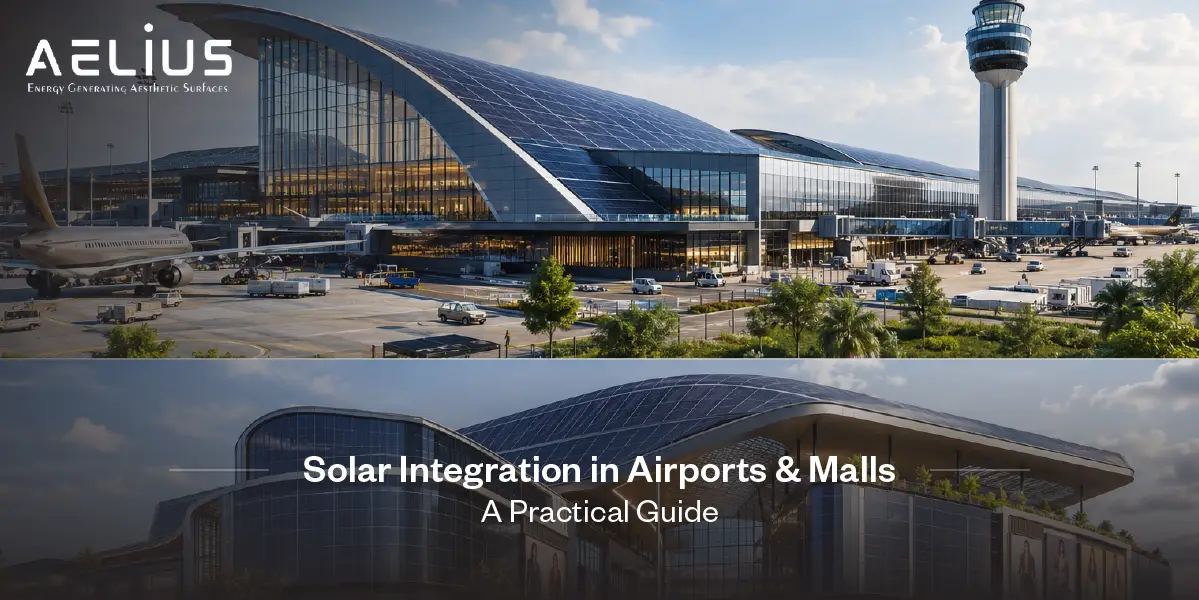
Large public infrastructure spaces such as airports, malls, and transit hubs consume significant amounts of electricity every day. From lighting and air conditioning to security systems and digital infrastructure, energy demand remains constant and generally continues around the clock.
At the same time, growing pressure around sustainability, operational efficiency, and ESG compliance is reshaping how these spaces are powered. Many infrastructure operators are now moving away from complete dependence on conventional energy sources and exploring renewable alternatives.
Solar energy has emerged as one of the most practical and scalable solutions for this shift. Technologies such as solar rooftop systems are already driving early adoption across high-consumption facilities by helping reduce costs while supporting sustainability goals.
In this blog, we will explore how solar integration is being applied across airports, malls, and public infrastructure, along with the benefits and practical considerations that shape successful implementation.
Exploring solar solutions for large-scale infrastructure?
A] Why Is Solar Integration Important for Public Infrastructure?
Public infrastructure operates on an entirely different energy scale compared to residential or smaller commercial spaces. Airports, shopping malls, metro stations, and government complexes require uninterrupted power to support critical daily operations. This creates both a financial burden and an environmental challenge.
Electricity costs continue to rise, making long-term optimisation a priority for facility operators. At the same time, governments and regulatory bodies are encouraging renewable energy adoption through policy frameworks and sustainability mandates.
Solar integration helps address both concerns. It allows infrastructure owners to generate part of their energy onsite, reducing reliance on the grid while creating greater predictability in operational costs.
Successful large-scale deployment also depends on robust system design and dependable production capabilities, which is why BIPV and solar panel manufacturing are important for long-term performance.
Beyond economics, solar adoption directly contributes to lowering carbon emissions and improving sustainability performance. For organisations working toward ESG benchmarks, this becomes an important strategic advantage.
As public infrastructure evolves into smarter and more resilient systems, solar is no longer viewed as an optional upgrade. It is becoming a practical foundation for future-ready energy planning.
B] How Is Solar Being Integrated into Airports, Malls, and Public Spaces?
Solar integration is being adapted across modern infrastructure to align with available space and operational needs. Common applications include:
- Rooftop Installations: Large roof surfaces on airport terminals, malls, and public buildings offer ideal space for high-capacity solar deployment.
- Solar Carports: Parking zones are increasingly being converted into energy-generating assets while also providing shaded parking.
- Building-Integrated Solar: Solar panels are being incorporated into facades, skylights, and shading systems through BIPV solutions. This approach is seeing growing adoption across commercial developments, particularly through solar facades for IT parks and corporate campuses that combine energy generation with architectural integration.
- Auxiliary Infrastructure: Solar energy is also powering street lighting, digital signage, EV charging stations, and external utility systems.
Solar adoption varies by sector based on operational demands:
- Airports: Expansive rooftops and continuous power requirements make airports highly suitable for large-scale integration.
- Malls: Daytime energy consumption aligns well with solar generation, improving efficiency and savings.
- Public Infrastructure: Transit hubs, civic buildings, and public service facilities are increasingly adopting solar to support long-term sustainability targets.
C] What Are the Key Benefits of Solar Integration at Scale?
Large-scale solar integration offers immediate operational gains and lasting strategic value, with benefits that extend beyond reduced electricity costs. Key advantages include:
- Reduced Energy Costs: Generating power onsite lowers dependence on purchased electricity and reduces long-term operational expenses.
- Lower Grid Dependence: Solar supports greater energy independence and reduces exposure to fluctuating utility costs.
- Smaller Carbon Footprint: Renewable energy adoption directly cuts greenhouse gas emissions and supports environmental commitments.
- Stronger ESG Performance: Visible investment in clean energy strengthens sustainability reporting and compliance credentials.
- Improved Energy Resilience: When combined with storage or hybrid systems, solar enhances reliability during grid disruptions.
- Positive Public Perception: Infrastructure projects powered by renewable energy reinforce a progressive and responsible brand image.
D] What Design and Operational Factors Influence Solar Integration?
Successful solar deployment depends on careful planning. Large public spaces often involve complex structures and operational requirements that influence system design. Before implementation, several factors should be evaluated:
- Available Installation Space: Rooftops, parking structures, facades, and open land determine possible system scale.
- Structural Readiness: Load-bearing capacity must be assessed to ensure buildings can safely support solar infrastructure.
- Energy Consumption Patterns: Understanding when and how power is used helps optimise system sizing.
- Electrical Integration: Solar systems must connect smoothly with existing electrical infrastructure.
- Maintenance Planning: Regular cleaning, inspection, and performance monitoring are essential for efficiency.
- Location and Climate: Solar performance depends on sunlight exposure, weather conditions, and local environmental factors.
- Regulatory compliance: Airports and other sensitive public infrastructure may require additional siting, safety, and approval checks under applicable civil aviation guidelines.
A well-planned system balances technical performance with operational practicality, ensuring reliable long-term results.
E] What Challenges Should Be Considered in Large-Scale Solar Adoption?
While solar offers clear advantages, implementation at scale comes with challenges that require careful management.
- Initial Investment: Upfront costs can appear substantial, even though long-term savings often justify the investment.
- Regulatory Processes: Approvals, permits, and utility coordination can extend project timelines.
- Stakeholder Coordination: Large projects often involve multiple decision-makers, contractors, and authorities.
- Urban Space Constraints: Dense infrastructure environments may limit installation opportunities.
- Retrofit Complexity: Integrating solar into existing facilities requires detailed planning to avoid operational disruption.
Addressing these factors early improves execution and helps ensure smoother project delivery.
Discover tailored BIPV and turnkey solar solutions for large-scale public and commercial spaces.
Conclusion
Solar integration is quickly becoming an essential part of modern infrastructure planning. For airports, malls, and public spaces, it offers a practical path toward lower operational costs, stronger sustainability performance, and long-term energy resilience.
Its scalability makes it suitable across diverse infrastructure types, whether through rooftop systems, carports, or integrated building solutions.
As infrastructure moves toward renewable-led development, partnering with Aelius, a trusted manufacturer of BIPV and turnkey solar solutions, can help turn long-term energy goals into practical outcomes. To explore the right solution for your next project, contact us.

Mr. Ankit Modi
Mr. Ankit Modi is the Founder & CEO of Aelius, driving innovation in Building-Integrated Photovoltaics (BIPV) and solar design. With a Master’s in Renewable Energy and Architecture from Nottingham University, UK, and 18+ years of experience in renewable energy and solar solutions, he brings together architectural sensitivity and technical precision. As a Certified Low Carbon Consultant with CIBSE (UK), he brings a strong focus on sustainable building practices and renewable integration. He is also associated with BREEAM (UK), IGBC, and GRIHA, supporting his vision for low-carbon architecture.