
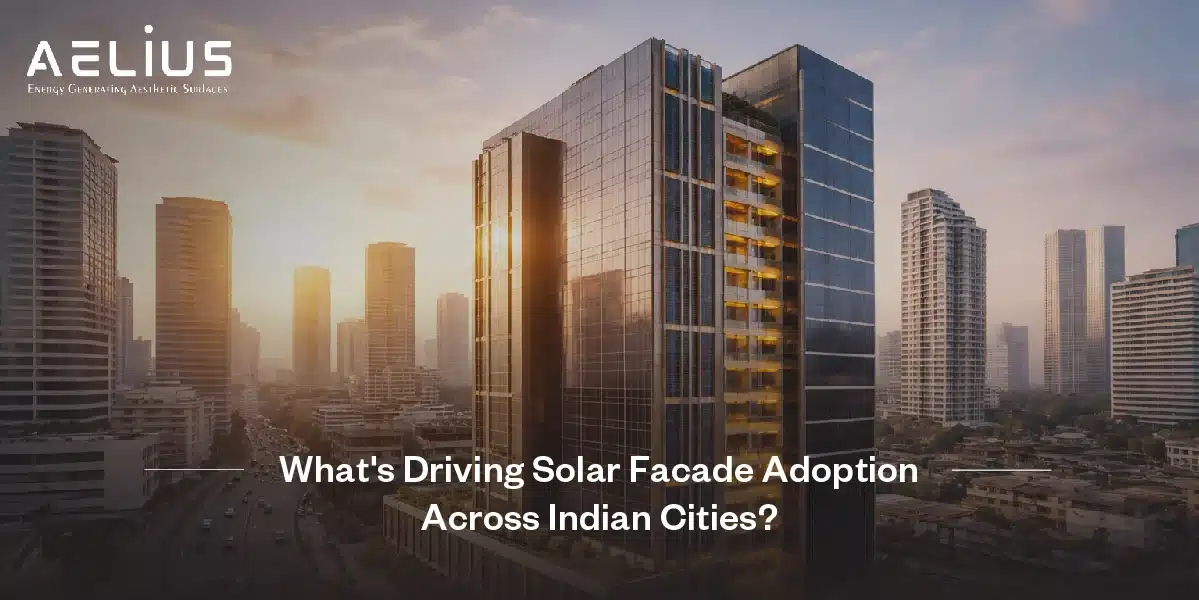
India’s urban skyline is changing rapidly, with buildings now expected to do far more than provide functional space. As cities face rising energy demand, increasing temperatures, and stronger sustainability expectations, developers are looking beyond conventional construction approaches. This shift is driving growing interest in solar facade systems that combine energy generation with modern architectural design. Different from traditional rooftop solar installations, solar facades make use of vertical building surfaces to generate clean energy while improving the visual identity of the structure. From commercial towers to premium residential developments, solar facade architecture is emerging as a practical solution for creating smarter, more efficient, and future-ready urban buildings.
Transform building facades into clean energy-generating assets.
A] What Are Solar Facades and Why Are They Gaining Attention?
Solar facades are building exteriors integrated with photovoltaic technology that allows the facade itself to generate electricity. These systems are installed on vertical surfaces such as curtain walls, cladding panels, architectural facade panels, or shading elements. Advances in BIPV manufacturing are also helping improve the efficiency, durability, and design adaptability of modern solar facade systems.
Unlike traditional cladding, which mainly serves structural or aesthetic purposes, solar facade panels actively contribute to a building’s energy performance by converting sunlight into usable power. Their growing popularity comes from their ability to combine clean energy generation with contemporary building design.
Solar facades are especially useful in urban environments where rooftop space is limited. By transforming unused vertical surfaces into energy-generating assets, they help support more efficient and sustainable urban infrastructure.
B] Why Are Indian Cities Turning to Solar Facades Now?
Several urban and environmental factors are accelerating the adoption of solar facade systems across Indian cities.
- Rising Urban Energy Consumption
Commercial buildings, IT parks, hotels, and mixed-use developments consume significant amounts of electricity every day. Solar facades help offset part of this growing energy demand through on-site renewable power generation. - Limited Rooftop Space
In densely built cities, rooftop areas are often occupied by utilities, HVAC systems, or recreational spaces. Solar facades allow developers to utilise unused vertical surfaces for energy generation. - ESG and Green Building Compliance
Developers and corporations are under increasing pressure to meet ESG goals and green building certification standards. Solar facade integration supports sustainability targets while contributing toward certifications such as LEED, IGBC, and GRIHA through improved building energy performance and renewable energy integration. - Smart City and Net-Zero Initiatives
Government policies, smart city projects, and net-zero commitments are encouraging the adoption of cleaner and more energy-efficient building technologies across urban infrastructure. - Demand for Future-Ready Construction
Modern buildings are now expected to deliver long-term value through performance, sustainability, and operational efficiency. Solar facades support this shift by combining energy generation with intelligent facade design.
C] How Do Solar Facades Improve Building Performance Beyond Energy Generation?
Solar facades offer advantages that extend well beyond electricity generation. Their integration into the building envelope contributes to both operational efficiency and architectural value.
- Energy Savings: Solar facade systems reduce dependence on grid electricity by generating renewable energy directly from the building exterior.
- Better Thermal Performance: Certain solar facade materials help reduce solar heat gain inside the building, which can improve indoor comfort and decrease cooling loads in warmer climates.
- Enhanced Visual Appeal: Modern solar facade panels are available in various finishes, colours, and configurations, allowing architects to create premium-looking building exteriors without compromising sustainability goals.
- Better Asset Value: Buildings with integrated energy-efficient technologies are increasingly viewed as future-ready assets. This can improve long-term marketability and commercial value.
- Stronger Sustainability Credentials: Solar facade integration supports green building certifications and strengthens ESG positioning for developers, businesses, and institutional projects focused on sustainable infrastructure.
D] Which Indian Buildings Benefit Most from Solar Facade Systems?
Solar facade systems are particularly effective for buildings with large exterior surfaces and high operational energy demands.
- Commercial Office Towers
High-rise office buildings offer extensive vertical facade areas that can be used for large-scale energy generation. Learn how solar facades for IT parks and corporate campuses support energy-efficient commercial infrastructure. - Hotels and Mixed-Use Developments
These projects benefit from both improved aesthetics and long-term operational savings through reduced electricity consumption. - Institutional Campuses
Universities, hospitals, and research facilities can use solar facades to support long-term energy optimisation and sustainability goals. - Premium Residential Projects
Luxury residential developments are increasingly adopting design-led sustainability features that improve efficiency while enhancing visual appeal. - Government Infrastructure
Public buildings and civic infrastructure projects often use solar facade systems to demonstrate visible commitment toward sustainable urban development and clean energy adoption.
E] What Should Developers Consider Before Integrating Solar Facades?
Successful solar facade integration requires careful planning during the early design and engineering stages of a project.
- Building Orientation and Sun Exposure
The facade’s exposure to sunlight directly affects energy generation performance and system efficiency. - Structural Integration
Solar facade systems should be planned alongside the building envelope to ensure proper structural compatibility and seamless integration. - Architectural Compatibility
The selected facade system should align with the building’s visual identity, materials, and overall design intent. - Long-Term Maintenance
Developers should consider access, cleaning requirements, and maintenance planning to ensure consistent long-term performance. - Climate and Durability
Facade materials must be suitable for local weather conditions, including heat, humidity, dust, and heavy rainfall common across many Indian cities. - Integrated Solar Design Expertise
Working with specialists in solar-integrated facade architecture helps ensure better technical performance, aesthetics, and long-term project value.
Integrate sustainable facade technologies into modern urban projects.
Conclusion
Solar façades are no longer an experimental design feature—they are becoming a practical response to the energy, space, and sustainability challenges facing Indian cities. As urban development becomes denser and environmental expectations rise, buildings will need to deliver more than visual impact. They will be expected to generate value through efficiency, performance, and clean energy production. For architects, developers, and city planners, integrating solar façades is about designing infrastructure that remains relevant for decades. Aelius, an innovative manufacturer of BIPV and turnkey solar solutions, supports architects and developers with integrated solar facade technologies tailored for high-performance urban infrastructure.
As sustainable construction expectations continue to evolve, organisations planning energy-efficient urban projects can contact us to explore integrated BIPV and solar facade solutions designed for long-term energy performance and architectural efficiency.

Mr. Ankit Modi
Mr. Ankit Modi is the Founder & CEO of Aelius, driving innovation in Building-Integrated Photovoltaics (BIPV) and solar design. With a Master’s in Renewable Energy and Architecture from Nottingham University, UK, and 18+ years of experience in renewable energy and solar solutions, he brings together architectural sensitivity and technical precision. As a Certified Low Carbon Consultant with CIBSE (UK), he brings a strong focus on sustainable building practices and renewable integration. He is also associated with BREEAM (UK), IGBC, and GRIHA, supporting his vision for low-carbon architecture.