Intelligent Solar Control for High-Performance Facades
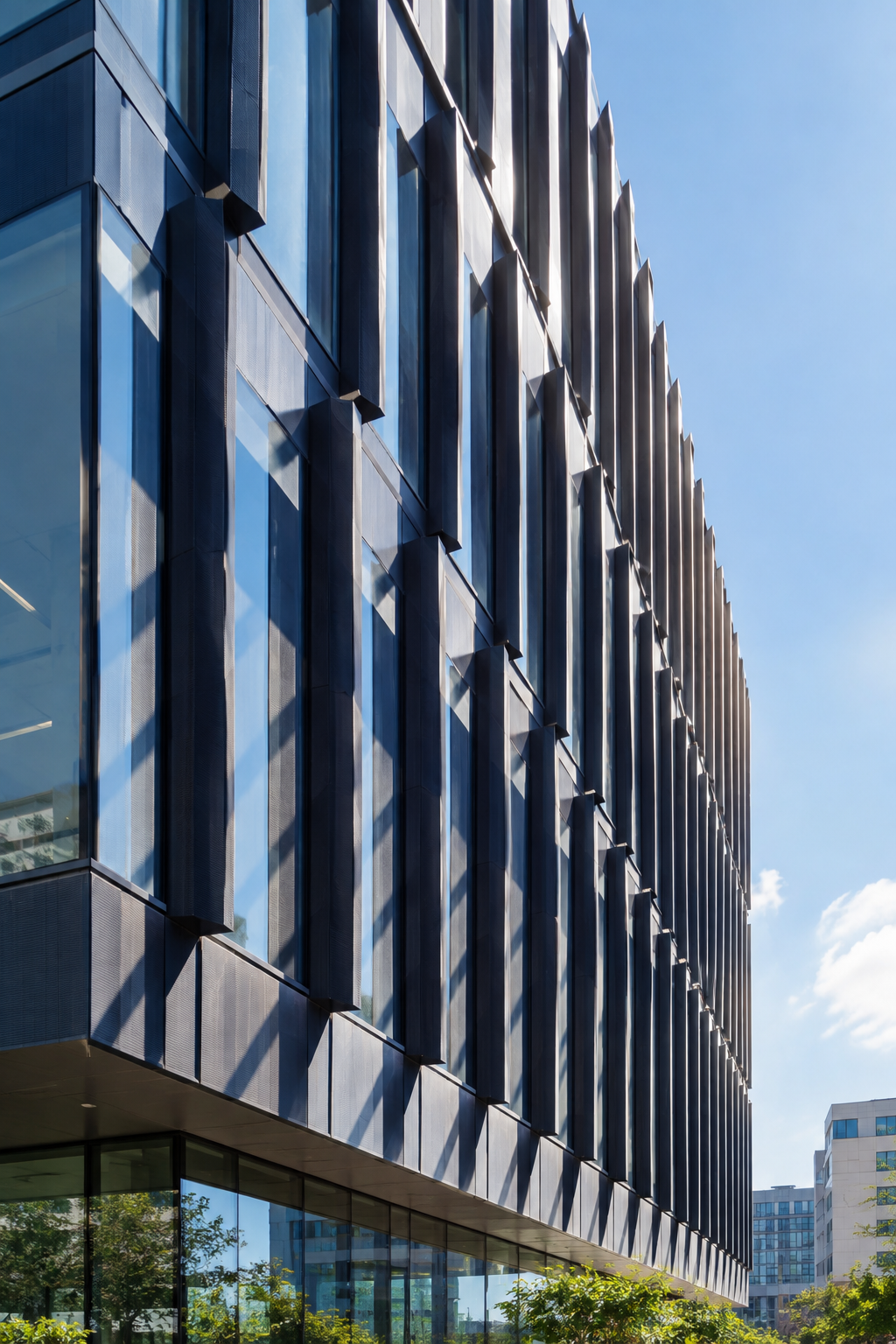
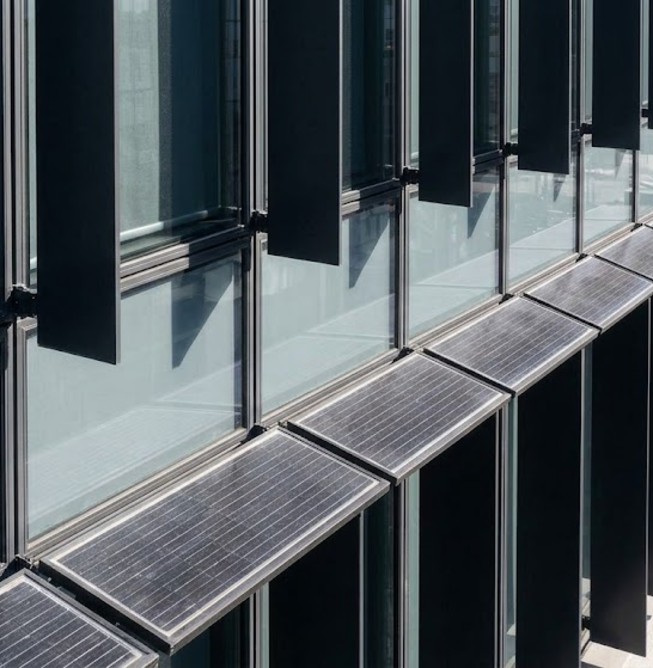
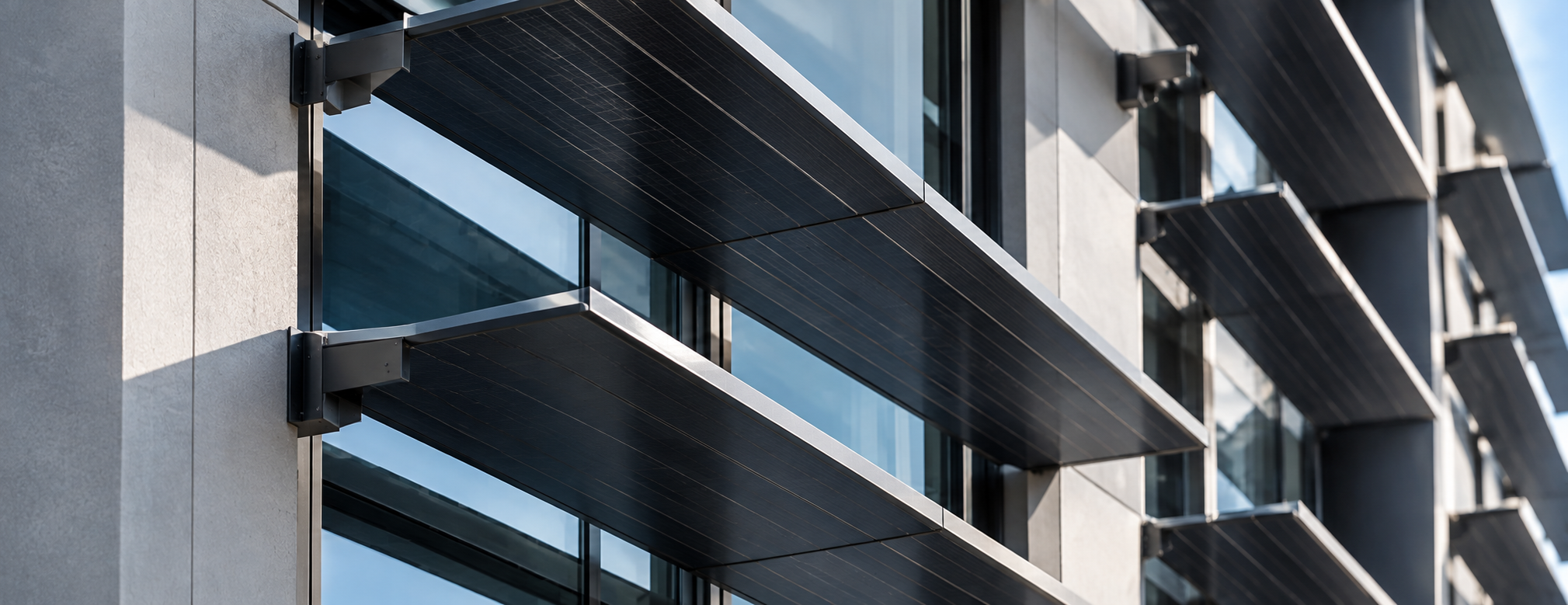
Solar fins integrate photovoltaic modules into projecting architectural elements and can be installed on facades, balconies, or shading structures. By intercepting direct sunlight before it reaches glazed areas, they help manage solar heat gain and glare while using sun-exposed surfaces to generate electricity. This makes them particularly useful for buildings with extensive glazing or limited roof area for conventional solar installations.
Aelius, a leading manufacturer of BIPV and turnkey solar solutions, develops engineered solar fin systems tailored to each project’s geometry, orientation, structural requirements, and integration needs. Suitable for commercial, hospitality, institutional, and residential developments, these systems can be configured to complement different architectural designs and performance objectives.
For buildings with large glazed areas, facade orientation plays an important role in managing solar exposure. Solar fins can be positioned and sized to respond to the sun’s path, helping shade targeted portions of the facade while allowing the integrated photovoltaic surfaces to generate electricity. This makes them a useful component of a broader passive solar and building-energy strategy.
Integrating photovoltaics into architectural elements allows parts of the building envelope to contribute to on-site energy generation while serving their intended architectural function. BIPV fin systems can therefore turn otherwise underutilised facade areas into productive surfaces, adding energy-generating capability without requiring additional rooftop space.
1. How are BIPV fins maintained after installation?
BIPV fins generally require routine cleaning, visual inspections, and periodic checks of electrical and mounting components. Maintenance requirements may vary based on the installation environment and system design.
2. Can BIPV fins be used in new construction as well as building retrofit projects?
Yes, BIPV fins can be incorporated into new buildings during facade design or considered for suitable retrofit projects. Their feasibility depends on factors such as facade structure, orientation, available space, and integration requirements.
3. What factors should architects consider when designing BIPV fins for a building?
Architects should consider facade orientation, solar exposure, fin dimensions, spacing, angle, structural requirements, glazing areas, and the desired shading and energy performance. Coordination with the building's overall facade and electrical design is also important.
4. Does Aelius provide end-to-end EPC support for BIPV fin projects?
Yes, Aelius provides end-to-end support covering design coordination, engineering, installation, and system integration. Contact us to discuss a BIPV fin solution tailored to your project’s architectural and technical requirements.