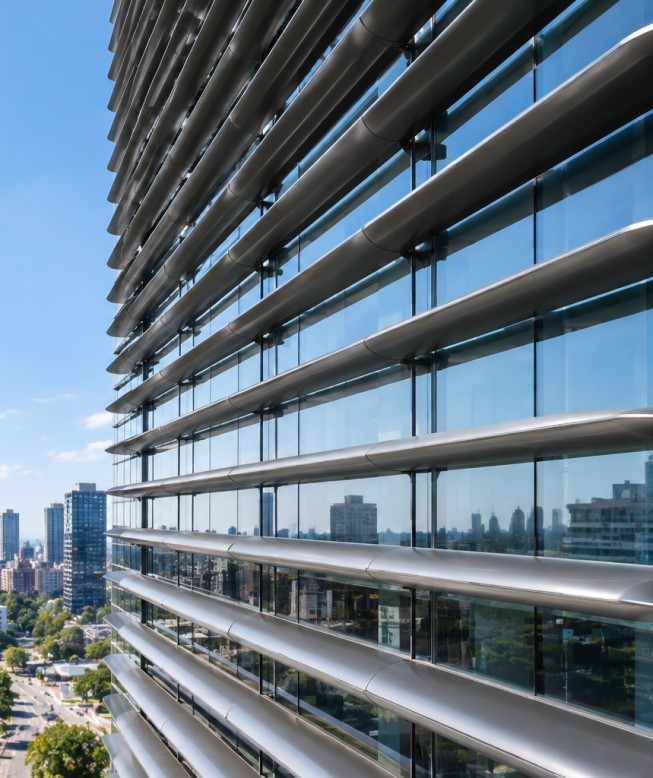
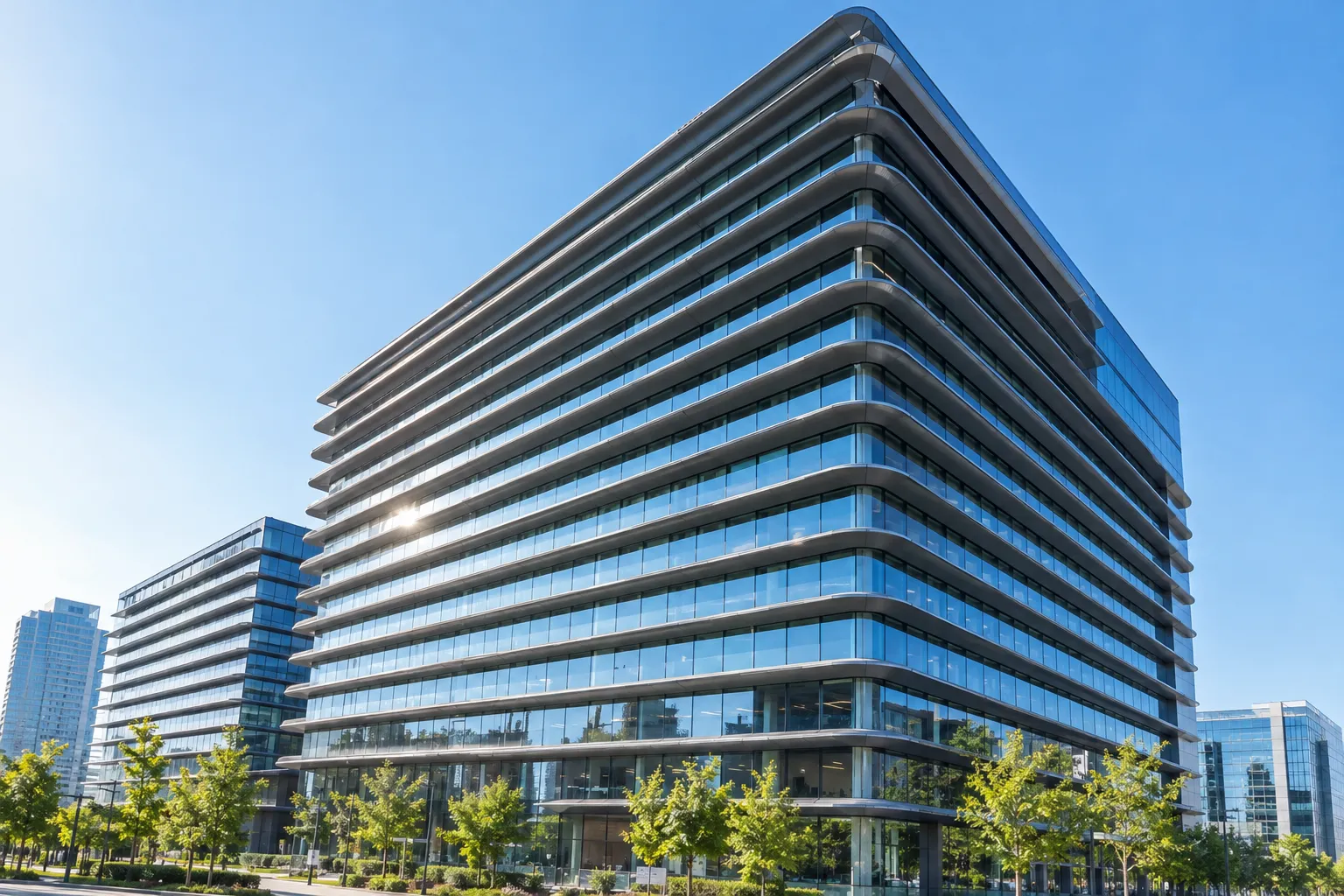
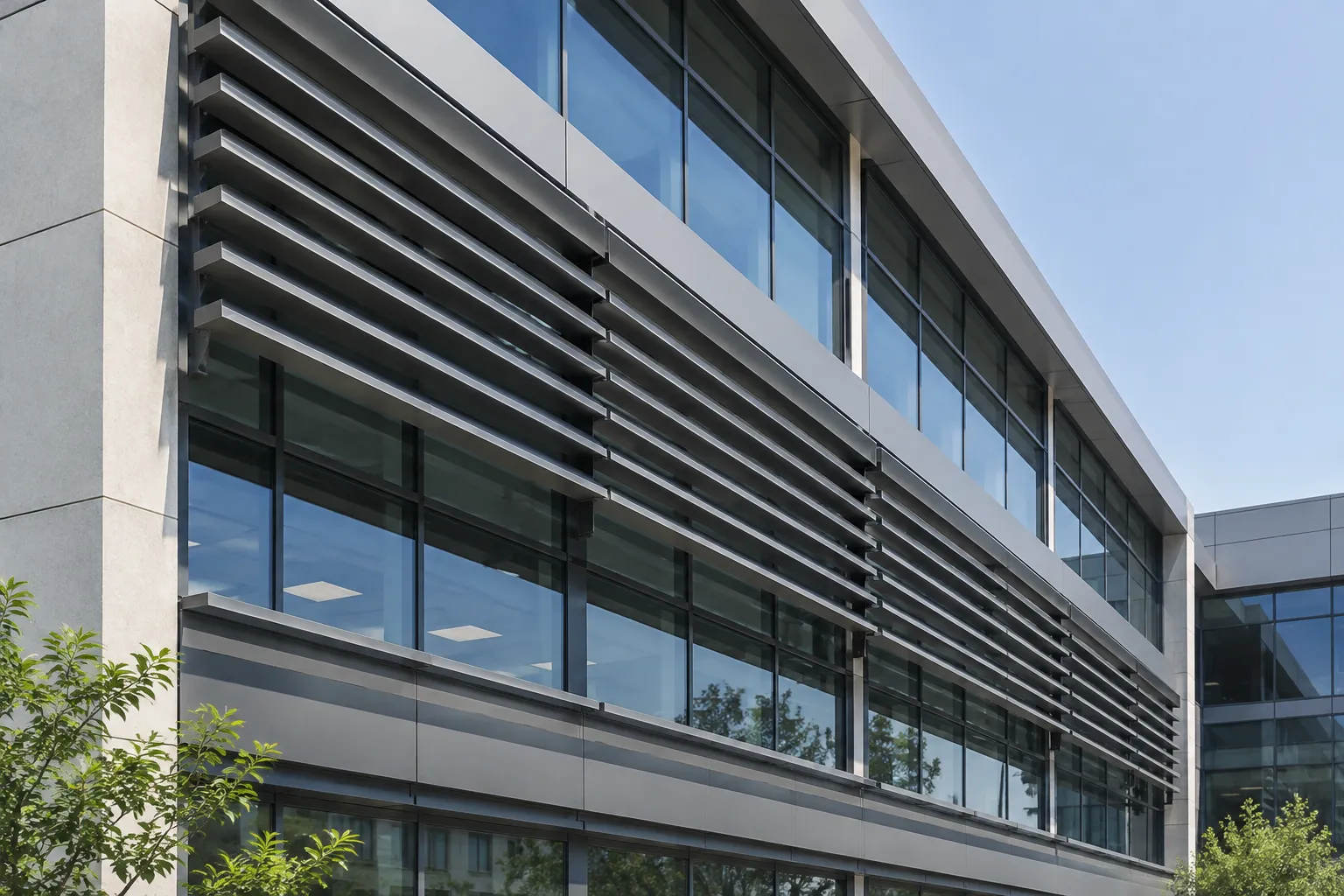
Solar louvers integrate photovoltaic modules into architectural shading systems, transforming sun-exposed facades into energy-generating building elements. By helping reduce direct solar exposure and glare while producing on-site electricity, they can support cooling efficiency, indoor comfort, and broader energy-performance goals without requiring additional roof or land area. Suitable for commercial, hospitality, institutional, and premium residential projects, solar louvers bring together renewable energy generation and contemporary architectural design.
Aelius, a leading manufacturer of BIPV and turnkey solar solutions, delivers engineered louver solutions that combine power generation, facade functionality, and architectural intent for new builds and retrofits alike.
As architects and developers seek solutions that combine energy performance with architectural functionality, solar louvers provide an effective way to integrate renewable energy into the building envelope. Their shading function can help manage solar exposure, while the integrated photovoltaic modules generate electricity from available sunlight.
The growing adoption of BIPV louver solutions reflects a broader shift towards multifunctional building elements that contribute to both design and sustainability goals. Backed by advancements in BIPV and solar panel manufacturing, these systems can support energy-conscious design and contribute towards green building frameworks such as GRIHA, LEED, and IGBC.
1. Are BIPV louvers suitable for green building and sustainability-focused projects?
Yes, BIPV louvers can support green building projects by combining solar energy generation with architectural shading and efficient use of building surfaces. Their energy contribution may support sustainability frameworks such as IGBC, GRIHA, and LEED, particularly in commercial, institutional, and hospitality projects targeting net-zero or energy-efficient certifications.
2. What factors should architects consider when designing a building with BIPV louvers?
Architects should consider building orientation, solar exposure, shading requirements, louver placement, facade design, structural integration, and electrical requirements. These factors help optimise both shading performance and solar energy generation.
3. How can architects, developers, and EPC companies collaborate with Aelius for BIPV louver projects?
Aelius can support projects through design coordination, system planning, engineering, and installation integration based on project requirements. Contact us to discuss your BIPV louver project and explore a suitable solution.
4. Can solar louvers be installed vertically as well as horizontally?
Yes, solar louvers can be designed for both vertical and horizontal installation, depending on the building orientation, facade requirements, and shading objectives. The configuration can be customised to suit the architectural design and solar exposure.
5. What is the expected ROI of installing BIPV louvers on a commercial building?
ROI depends on factors such as system capacity, installation cost, solar exposure, electricity tariffs, operating conditions, and project location. In many commercial settings, payback periods typically range from ~6 to 10 years, with shorter payback possible where tariffs are high, incentives are available, or louvers replace conventional cladding or shading. A project-specific assessment is required to estimate the potential returns.