
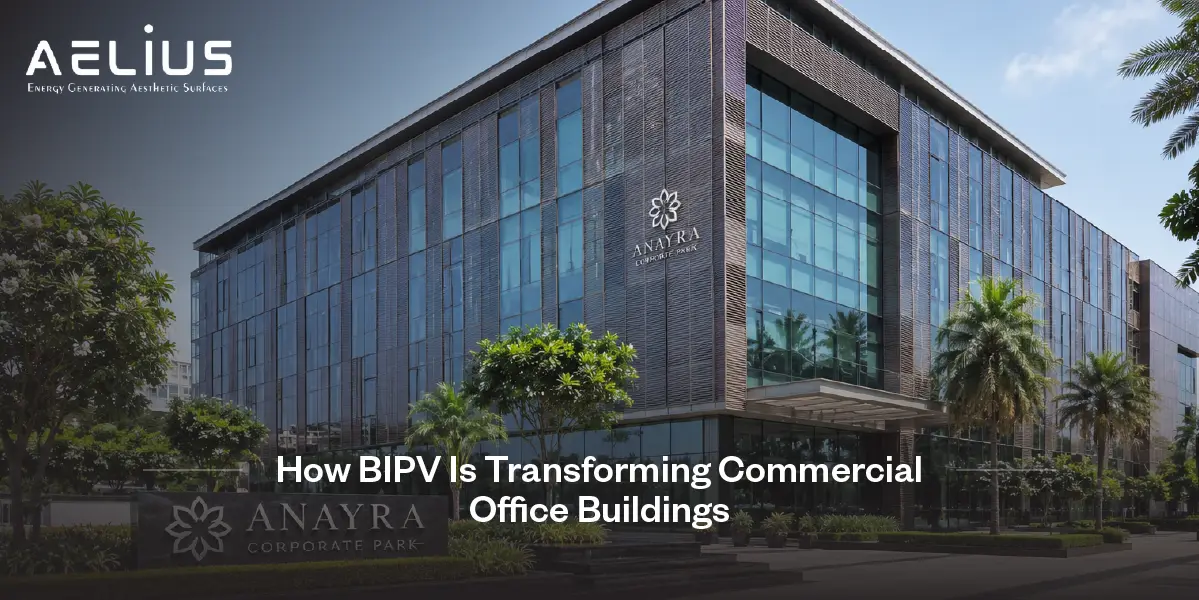
Commercial office buildings are under growing pressure to become more energy-efficient, sustainable, and future-ready. Rising electricity costs, stricter environmental expectations, and greater focus on ESG and net-zero goals are influencing how modern workplaces are designed and operated. Building-Integrated Photovoltaics (BIPV) offer a practical way to address these demands by combining renewable energy generation with essential building elements. Instead of treating solar technology as an addition, BIPV integrates it directly into facades, roofs, skylights, canopies, and other architectural features. This approach allows commercial buildings to balance energy performance with design, functionality, and long-term sustainability.
Explore BIPV solutions designed for high-performance commercial office buildings
What is BIPV and How Do They Work in Commercial Buildings?
Building-Integrated Photovoltaics (BIPV) combine solar energy generation with the building’s architectural elements. Unlike conventional rooftop solar, BIPV becomes part of the building itself. Common integration areas include:
- Building Facades: BIPV cladding panels can form part of the external envelope while generating renewable electricity and contributing to the building’s overall architectural design.
- Roofs: BIPV roofing systems combine weather protection with solar power generation.
- Skylights: Solar-integrated glazing can bring daylight into the building while producing clean energy.
- Canopies: Solar canopies provide shade and shelter while making use of available surface areas.
- Glass Facades: BIPV can be integrated into glass facade systems to contribute to on-site renewable energy generation and the building’s overall design.
Integrating BIPV during the design stage allows architects and developers to consider structural requirements, aesthetics, and energy performance together, creating greater long-term value.
Why Are Solar Panels for Commercial Buildings Evolving Towards BIPV?
Commercial buildings are looking for smarter ways to improve energy performance while meeting modern design and sustainability goals. BIPV helps address these needs by making the building envelope part of the energy strategy. Several factors are driving this shift:
- Growing Energy Demand: Solar integration can help commercial buildings generate clean electricity and reduce dependence on grid power.
- Limited Rooftop Space: High-rise offices may have insufficient roof area to meet their energy needs through conventional rooftop solar alone.
- Dual Functionality: BIPV combines essential building elements with electricity generation, allowing facades, roofs, and other surfaces to serve two purposes.
- Design Integration: Modern BIPV solutions can be incorporated into architectural concepts while maintaining the building’s visual character.
- ESG Alignment: On-site renewable energy generation can support corporate sustainability commitments and broader ESG objectives.
- Long-Term Savings: Generating electricity on-site can contribute to lower operational energy costs over the building’s useful life.
As commercial buildings become more performance-driven, BIPV offers a more integrated approach to solar adoption.
Where Can BIPV Be Integrated in Commercial Office Buildings?
BIPV can be incorporated across different parts of a commercial office building, depending on its design, orientation, available surface area, and energy objectives. Common applications include:
- Solar Facades: Photovoltaic modules can be integrated into external walls to turn vertical surfaces into energy-generating assets.
- Curtain Walls: Solar-integrated glazing can combine facade functionality with renewable energy generation while supporting the building’s architectural character.
- Roofing Systems: BIPV roofing can replace conventional materials while generating electricity from available roof surfaces.
- Skylights and Atriums: Photovoltaic glazing can provide daylight while contributing to on-site solar generation.
- Entrance Canopies: Solar canopies can offer shade and weather protection while using the available surface to generate power.
- Parking Structures: Where suitable, solar installations can be integrated into parking structures or covered parking areas to generate additional clean energy.
How Can Developers and Architects Plan a Successful BIPV Integration?
When designing with BIPV, architects and developers should consider solar technology and architectural planning together from the beginning.
- Building Orientation: Assess the building’s orientation and surrounding conditions to identify surfaces with suitable solar exposure.
- Solar Exposure: Evaluate shading, seasonal sunlight, and surrounding structures to estimate realistic energy generation potential.
- Facade Design: Select BIPV solutions that complement the building’s appearance, materials, glazing, and overall architectural vision.
- Structural Integration: Plan for structural loads, fixing systems, waterproofing, electrical connections, and other technical requirements early.
- Energy Targets: Define expected energy generation and establish how BIPV will contribute to the building’s overall energy strategy.
- Lifecycle Costs: Consider long-term energy savings and performance alongside the initial investment.
- Maintenance Planning: Ensure systems are accessible for inspection, cleaning, repairs, and performance monitoring throughout their service life.
- Experienced Partners: Work with experienced BIPV manufacturers and solution providers who can support design coordination, engineering, installation, and system integration.
To learn how integrated solar benefits project planning and development, explore the key advantages of BIPV for architects and real estate developers.
Early collaboration between architects, developers, engineers, and BIPV specialists can help minimise design conflicts and improve long-term project performance.
How Does BIPV Support Sustainable Commercial Developments?
BIPV can contribute to more sustainable commercial developments by making renewable energy generation part of the building itself. Key benefits include:
- Reduced Grid Dependence: On-site solar generation can reduce reliance on electricity from the grid.
- Lower Operational Costs: Generating renewable energy on-site can help manage long-term electricity expenses.
- Improved Energy Performance: BIPV can contribute to the overall energy efficiency and performance strategy of a commercial building.
- Green Building Goals: Properly designed BIPV systems may support sustainability objectives associated with frameworks such as LEED, IGBC, and GRIHA.
- ESG Commitments: Renewable energy generation can strengthen corporate efforts towards environmental responsibility and measurable sustainability goals.
- Future-Ready Infrastructure: Integrating solar into the building envelope can help offices prepare for evolving energy requirements and sustainability expectations. When planned as part of the building design, BIPV can support both environmental performance and long-term operational value.
Discuss the right BIPV solution for your next commercial project
Conclusion
BIPV is becoming an integral part of modern commercial office design rather than an add-on considered after construction. By integrating solar technology into facades, roofs, glazing, and other architectural elements, commercial buildings can generate renewable energy while maintaining their design intent and functional requirements. However, successful implementation depends on thoughtful planning, suitable building design, realistic energy objectives, and effective system integration.
Aelius, a leading manufacturer of BIPV and turnkey solar solutions, can help developers and architects make informed decisions about technology, aesthetics, and lifecycle performance. To explore suitable solutions for your next commercial project, contact us to discuss your BIPV requirements.
FAQs
1. Where can BIPV systems be installed in office buildings?
BIPV systems can be integrated into building facades, curtain walls, roofs, skylights, glass facades, entrance canopies, and suitable parking structures. The right application depends on the building’s design, orientation, solar exposure, and energy requirements.
2. How do BIPV solutions benefit commercial office buildings?
BIPV solutions combine building functionality with renewable energy generation, helping reduce grid dependence and improve energy performance. They can also support ESG goals while contributing to modern architectural design.
3. How much energy can a commercial office building generate with BIPV?
Energy generation depends on building size, orientation, shading, and the BIPV area used. As a rough estimate, a well-designed 150 kWp BIPV system can generate about 150,000 to 210,000 kWh per year under favourable conditions, but exact output should be confirmed through a project-specific assessment.
4. Is BIPV suitable for both new and existing office buildings?
BIPV is particularly effective when considered during the design stage of a new building, allowing solar elements to be integrated from the outset. It can also be adapted to suitable existing buildings, depending on their structure, facade, and renovation requirements.
5. Are BIPV systems cost-effective for commercial office buildings?
BIPV can offer long-term value by combining building materials with renewable energy generation and potentially reducing electricity costs. Get in touch to discuss your project requirements and explore whether BIPV is a suitable investment for your building.

Mr. Ankit Modi
Mr. Ankit Modi is the Founder & CEO of Aelius, driving innovation in Building-Integrated Photovoltaics (BIPV) and solar design. With a Master’s in Renewable Energy and Architecture from Nottingham University, UK, and 18+ years of experience in renewable energy and solar solutions, he brings together architectural sensitivity and technical precision. As a Certified Low Carbon Consultant with CIBSE (UK), he brings a strong focus on sustainable building practices and renewable integration. He is also associated with BREEAM (UK), IGBC, and GRIHA, supporting his vision for low-carbon architecture.