
With rising electricity costs and growing environmental awareness, more urban homeowners are turning to solar energy. However, high-rise living often comes with space constraints, making traditional rooftop solar systems less practical. This is where balcony solar systems offer a smart alternative.
Designed for compact spaces, these systems can be installed on railings or small open areas without major structural changes. They are easy to set up, efficient for everyday usage, and suitable not only for apartments but also for villas and compact homes. As cities are evolving, balcony solar panels are becoming a practical and accessible way to adopt clean energy.
Looking to install a balcony solar system for your home?
A] What Powers a Balcony Solar System and How It Works
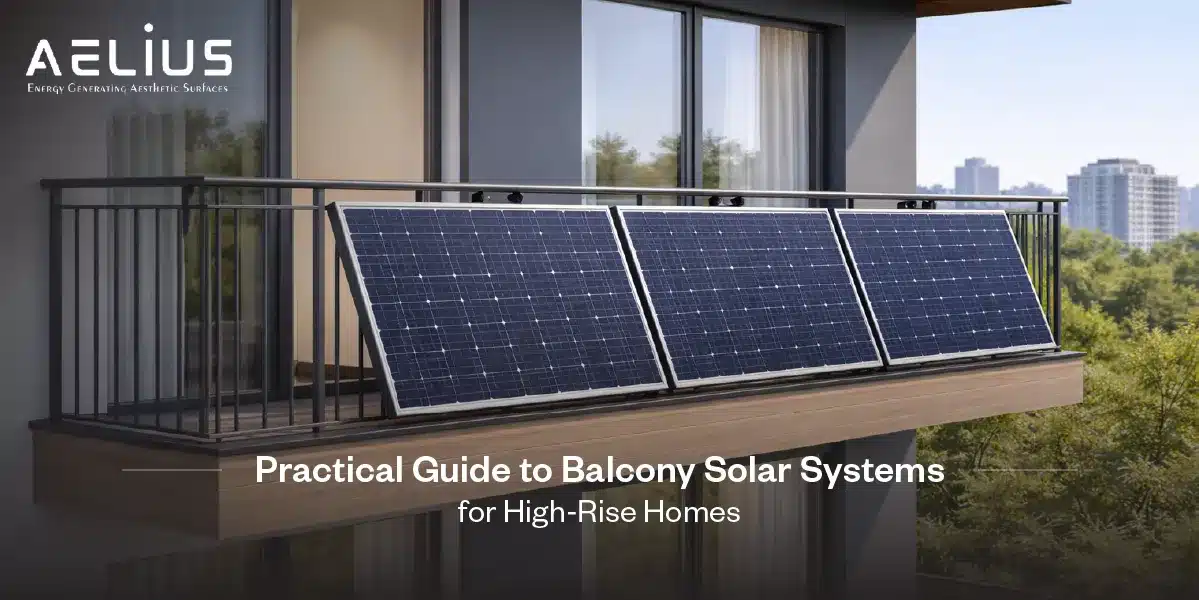
Balcony solar systems are compact setups designed to generate electricity using limited space. Instead of large rooftop installations, these systems use smaller solar panels mounted on balcony railings or walls.
At the core are solar panels that capture sunlight and convert it into electricity. This energy then passes through a microinverter, which converts it into usable power for your home. The system also includes mounting kits to securely fix the panels and simple plug connections for easy integration.
Many balcony systems follow a plug-and-play solar system approach. This means they require minimal wiring and can often be connected directly to a standard power outlet. The generated electricity is either used instantly within the home or fed into the grid, depending on the setup.
Overall, the process is straightforward, making it easy for homeowners to understand and adopt without technical complexity.
B] Why Are Balcony Solar Systems Ideal for High-Rise Apartments?
Balcony solar systems are especially suited for high-rise living, where space and access are often limited. They make solar adoption possible without relying on rooftops or shared infrastructure.
One of the biggest advantages is space optimisation. Even a small balcony can be used effectively to generate power. Since these systems are compact, they fit well into urban lifestyles without disrupting the overall layout of the home.
They also reduce installation challenges. In many cases, only minimal or simplified approvals are needed, with no structural changes, making the process smoother for residents. Another key benefit is flexibility. These systems can be relocated if you move, making them a practical option for renters.
While ideal for apartments, they are equally useful for villas or row houses where rooftop space may be limited or reserved for other uses.
C] What Are the Key Benefits of Installing Balcony Solar Panels?
Balcony solar panels offer several practical advantages for modern households. They are designed to deliver value without requiring large investments or space.
- Lower Electricity Bills: Helps power essential loads like lights, fans, and Wi-Fi, reducing monthly expenses.
- Reduced Carbon Footprint: Supports clean energy usage, contributing to a more sustainable lifestyle.
- Quick Installation: Faster to set up compared to traditional rooftop systems, with minimal disruption.
- Scalable Setup: You can start small and expand the system as your energy needs grow.
- Space-Efficient Design: Compact and visually unobtrusive, suitable for urban homes.
- Subsidy Potential: In some cases, systems may be eligible under schemes like PM Surya Ghar Yojana, subject to local rules and ownership conditions.
These benefits make balcony solar systems a practical entry point into solar energy, especially for urban homeowners looking for convenience and efficiency.
D] How Easy Is It to Install and Maintain a Balcony Solar System?
Balcony solar systems are designed for ease of installation and maintenance, with minimal disruption to daily life. Unlike traditional systems, they do not require extensive technical work or structural modifications.
- Plug-and-Play Installation: Most systems come pre‑configured, allowing quick setup with minimal wiring. However, installation and grid connection should be done by qualified technicians to ensure safety and compliance.
- No Structural Changes: Panels are mounted securely on railings or walls without heavy alterations.
- Quick Setup Timeline: Installation can usually be completed within a short time, often in a single day.
- Low Maintenance Needs: Regular cleaning of panels and occasional checks are enough to keep the system efficient.
- Safety and Stability: Proper mounting and standard electrical components ensure safe operation.
These systems are often available as ready-to-install kits, making them accessible even for first-time users who want a hassle-free solar solution.
E] What Should You Consider Before Installing a Balcony Solar System?
Before installing a balcony solar system, a few practical factors can help ensure better performance and long-term satisfaction. Key considerations include the following:
- Balcony Direction: South-facing balconies work best for maximum sunlight exposure throughout the day, though east- or west-facing setups can also generate consistent and usable output.
- Sunlight Availability: Check for shading from nearby buildings, trees, or surrounding structures, as prolonged shadows can directly impact overall system efficiency and energy generation.
- Energy Expectations: Understand that these systems are designed to support partial household loads, not complete energy consumption, making them suitable for essential and everyday usage.
- Balcony Size and Strength: Ensure there is adequate space for panel placement and that the railings or mounting area can safely support the system’s weight and structure.
- Local Guidelines: Some housing societies may have basic installation rules or aesthetic guidelines, so it is advisable to review them in advance to avoid potential restrictions.
Considering these aspects helps you choose the right setup and maximise the benefits of your solar investment.
Discover compact solar solutions designed for urban living
Conclusion
Balcony solar systems offer a practical and accessible way to bring solar energy into urban homes. They are ideal for apartments where rooftop access is limited, and equally useful for villas or compact homes with space constraints. With simple installation, flexible usage, and the ability to scale over time, they fit seamlessly into modern lifestyles.
As energy needs continue to grow, solutions like these make it easier for homeowners to take a step toward sustainability without complexity. If you are exploring a compact solar option for your home, this is a practical time to consider it. Get in touch with Aelius Turbina LLP for tailored guidance and solutions.

Mr. Ankit Modi
Mr. Ankit Modi is the Founder & CEO of Aelius, driving innovation in Building-Integrated Photovoltaics (BIPV) and solar design. With a Master’s in Renewable Energy and Architecture from Nottingham University, UK, and 18+ years of experience in renewable energy and solar solutions, he brings together architectural sensitivity and technical precision. As a Certified Low Carbon Consultant with CIBSE (UK), he brings a strong focus on sustainable building practices and renewable integration. He is also associated with BREEAM (UK), IGBC, and GRIHA, supporting his vision for low-carbon architecture.