
Solar energy adoption is steadily increasing across both commercial and residential projects. As buildings become more energy-conscious, the choice is no longer just about installing solar; it’s about how to integrate it. This brings up an important comparison: Building-Integrated Photovoltaics (BIPV) versus traditional solar panels.
While both generate clean energy, they differ significantly in design approach, cost structure, and long-term value. For architects, developers, and building owners, understanding these differences early can influence not just energy output but also the building’s overall design, functionality, and return on investment.
Explore BIPV solutions tailored to your project needs
A] What Is BIPV and How Is It Different from Traditional Solar Panels?
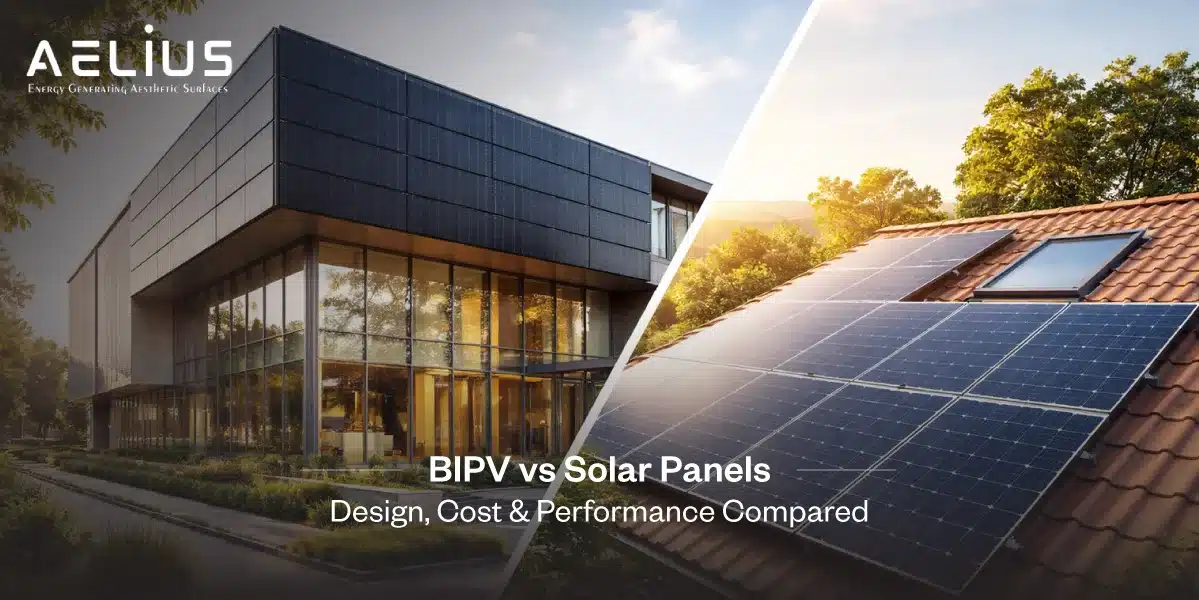
Building-Integrated Photovoltaics (BIPV) is a solar solution where elements are directly incorporated into a building’s structure. Instead of being added later, they become part of the facade, roof, or even glazing surfaces, making them an essential part of designing with BIPV approaches.
Traditional solar panels, on the other hand, are mounted onto existing roofs or structures. They function purely as an add-on system designed for power generation.
The key difference lies in integration. BIPV replaces conventional building materials while generating electricity at the same time. For example, a facade panel or skylight can double up as a solar surface. Traditional panels do not serve any structural or architectural role.
BIPV is generally preferred in new constructions or major renovations where design flexibility is available, while traditional systems are more common in retrofit projects.
B] How Do Installation and Integration Differ Between BIPV and Traditional Panels?
The installation approach varies significantly between the two systems. Below are the key differences across stages, design, and structure:
- Integration Stage: BIPV is planned during the design phase and integrated into the building envelope, which makes early coordination essential. It also ensures optimal integration and performance. Traditional panels are installed after construction is complete.
- Design Impact: BIPV influences facade design, material selection, and structural planning. Traditional systems have minimal design impact.
- Structural Considerations: BIPV requires coordination with architects and engineers. Load distribution and weatherproofing are part of the system itself. Traditional panels rely on mounting structures added later.
- Installation Timeline: BIPV aligns with construction timelines, while traditional solar can be installed relatively quickly post-construction.
C] What Are the Design and Aesthetic Differences?
Design is where BIPV stands out the most. It allows solar to blend seamlessly into the building rather than appearing as an external addition.
- Visual Integration: BIPV merges with facades, roofs, and glass surfaces, maintaining a clean architectural look. Traditional panels remain visibly mounted.
- Customisation Options: BIPV offers flexibility in colours, textures, and finishes, enabling alignment with design intent. Conventional panels have limited visual variation. This combination of aesthetics and functionality makes BIPV especially suitable for projects where appearance is as important as performance.
- Architectural Freedom: Designers can incorporate energy generation without compromising aesthetics. Traditional systems often require design adjustments to accommodate panels.
- Project Suitability: BIPV is ideal for premium, design-led developments. Traditional panels are better suited where function takes priority over form.
D] How Do Performance, Cost, and Maintenance Compare?
When comparing performance and cost, both systems have their own advantages depending on project priorities.
- Energy Generation: Traditional rooftop systems may face space limitations since only terrace areas are usable—and often not entirely so. BIPV expands generation potential by utilising facades, skylights, and other surfaces.
- Cost vs Value: Traditional panels have a lower upfront cost. BIPV involves higher initial investment but delivers long-term value by replacing building materials.
- Maintenance: Traditional systems are easier to access for maintenance. BIPV systems are integrated, so access planning is important from the start.
- Warranty & ROI: BIPV systems can offer up to 30 years of product and performance warranty. Conventional systems typically offer a 12–15 years product warranty and a 25–30 years performance warranty. BIPV can deliver stronger ROI due to its dual function.
| Aspect | BIPV (Building-Integrated PV) | Traditional Solar Panels |
| Integration | Part of the facade, roof, or glazing | Mounted on existing roofs/structures |
| Visual design | Blends with building architecture | Visible add-on panels |
| Best use case | New builds, major renovations | Retrofits, existing buildings |
| Function | Building material + energy generation | Energy generation only |
| Upfront cost | Higher initial investment | Lower initial cost |
| Design flexibility | Custom colours and finishes | Limited design options |
| Warranty | 30 years (product & performance) | 12–15 years (product), 25–30 years (performance) |
| ROI | Higher (dual-purpose benefit) | Moderate |
E] Why BIPV is a Popular Choice
BIPV is gaining attention not just for energy generation but also for the broader value it brings to modern buildings, such as the following:
- Architectural Harmony: BIPV integrates seamlessly into the building envelope, with options for custom colours, textures, and finishes. This allows it to align with the overall design vision rather than appearing as an add-on, making it particularly relevant for urban and design-driven projects.
- Dual Functionality: It replaces conventional materials like cladding or glass, optimising both space and cost over time.
- Expanded Energy Potential: By using multiple surfaces beyond the roof, it helps maximise energy generation in space-constrained environments.
- Sustainability Edge: It contributes to green building certifications and net-zero goals, making it attractive for future-ready developments.
- Long-Term Value: While the upfront cost is higher, the combination of durability, extended warranty, and dual-purpose use enhances overall project ROI.
Plan smarter with integrated solar solutions for long-term value
Conclusion
There is no one-size-fits-all answer when choosing between BIPV and traditional solar panels. The right solution depends on your project stage, budget, and design priorities.
If you are working on a new build or major renovation, BIPV offers the opportunity to integrate energy generation directly into the building’s design. For existing structures or cost-sensitive projects, traditional solar panels remain a practical and effective choice.
Evaluating both options early in the planning process can help you maximise performance, aesthetics, and long-term value. To explore solutions tailored to your project requirements, contact us at Aelius for expert guidance and end-to-end support.

Mr. Ankit Modi
Mr. Ankit Modi is the Founder & CEO of Aelius, driving innovation in Building-Integrated Photovoltaics (BIPV) and solar design. With a Master’s in Renewable Energy and Architecture from Nottingham University, UK, and 18+ years of experience in renewable energy and solar solutions, he brings together architectural sensitivity and technical precision. As a Certified Low Carbon Consultant with CIBSE (UK), he brings a strong focus on sustainable building practices and renewable integration. He is also associated with BREEAM (UK), IGBC, and GRIHA, supporting his vision for low-carbon architecture.